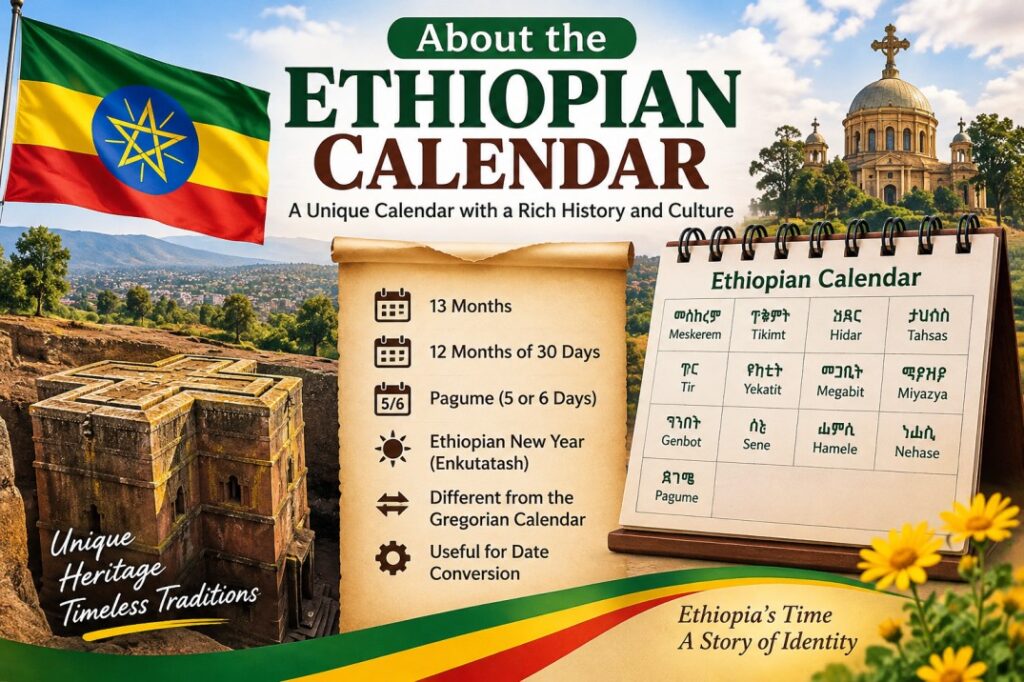
About the Ethiopian Calendar: The Ethiopian calendar is a traditional calendar system used in Ethiopia and Eritrea. It follows a different calculation system from the Gregorian calendar and has 13 months. The first 12 months have 30 days each, while Pagume, the 13th month, has 5 days in a normal year and 6 days in a leap year.
How Does the Ethiopian Calendar Work?
The Ethiopian calendar is based on an ancient calendar system and uses 13 months instead of the 12 months found in the Gregorian calendar. Each of the first 12 months contains 30 days. Pagume, the 13th month, contains 5 days in a regular year and 6 days in a leap year. The Ethiopian New Year begins on Meskerem 1, which usually falls on September 11 in the Gregorian calendar and September 12 during a Gregorian leap year.
Names of the 13 Ethiopian Calendar Months
- Meskerem
- Tikimt
- Hidar
- Tahsas
- Tir
- Yekatit
- Megabit
- Miyazya
- Sene
- Hamle
- Nehasse
- Pagume
Ethiopian Calendar and Gregorian Calendar
The Ethiopian and Gregorian calendars use different systems for numbering years and calculating dates. The Ethiopian calendar is generally about 7 to 8 years behind the Gregorian calendar. Although the calendars have different dates and year numbers, each Ethiopian date corresponds to a specific Gregorian date. An Ethiopian date converter can make it easier to find the corresponding date between the two calendar systems.
For additional calendar information, you can also refer to the Ethiopian calendar reference provided by Timeanddate.
Ethiopian New Year and Enkutatash
Ethiopian New Year is called Enkutatash and begins on Meskerem 1. It normally falls on September 11 in the Gregorian calendar and on September 12 during a Gregorian leap year. Enkutatash marks the beginning of a new year and is celebrated with family gatherings, traditional food, music, and cultural activities. It is one of the most important dates in the Ethiopian calendar.
What Is Pagume?
Pagume is the 13th and final month of the Ethiopian calendar. Unlike the other 12 months, which each have 30 days, Pagume has 5 days in a normal year and 6 days in a leap year. These additional days complete the Ethiopian calendar year before the start of Meskerem 1 and the Ethiopian New Year.
Why Use an Ethiopian Calendar?
An Ethiopian calendar is useful for checking Ethiopian dates, understanding local holidays, planning cultural and religious events, and comparing dates with the Gregorian calendar. It can also help people living outside Ethiopia understand important Ethiopian dates and celebrations. Our online calendar and conversion tools make it easier to check dates and move between the Ethiopian and Gregorian calendar systems.
Ethiopian Calendar Tools
EthiopianCalendar.in provides simple online tools for checking Ethiopian dates and understanding the Ethiopian calendar. You can use the Ethiopian Calendar 2026 page to browse dates, check today’s Ethiopian date, and explore the calendar months. Our Ethiopian Date Converter helps convert dates between the Ethiopian and Gregorian calendar systems, while the Ethiopian Holidays page provides a convenient list of important holidays and celebrations.
Frequently Asked Questions About the Ethiopian Calendar
What is the Ethiopian calendar?
The Ethiopian calendar is a traditional calendar system used in Ethiopia and Eritrea. It has 13 months, with 12 months containing 30 days each and Pagume as the 13th month.
How many months are in the Ethiopian calendar?
The Ethiopian calendar has 13 months. The first 12 months have 30 days each, while Pagume has 5 days in a normal year and 6 days in a leap year
How many years behind is the Ethiopian calendar?
The Ethiopian calendar is generally about 7 to 8 years behind the Gregorian calendar because the two calendars use different systems for calculating years and dates.
What is the Ethiopian New Year called?
The Ethiopian New Year is called Enkutatash. It begins on Meskerem 1 and usually falls on September 11 in the Gregorian calendar.
What is Pagume?
Pagume is the 13th and final month of the Ethiopian calendar. It has 5 days in a normal year and 6 days in a leap year.
How can I convert an Ethiopian date to a Gregorian date?
You can use our Ethiopian Date Converter to convert Ethiopian dates to Gregorian dates and Gregorian dates to Ethiopian dates.