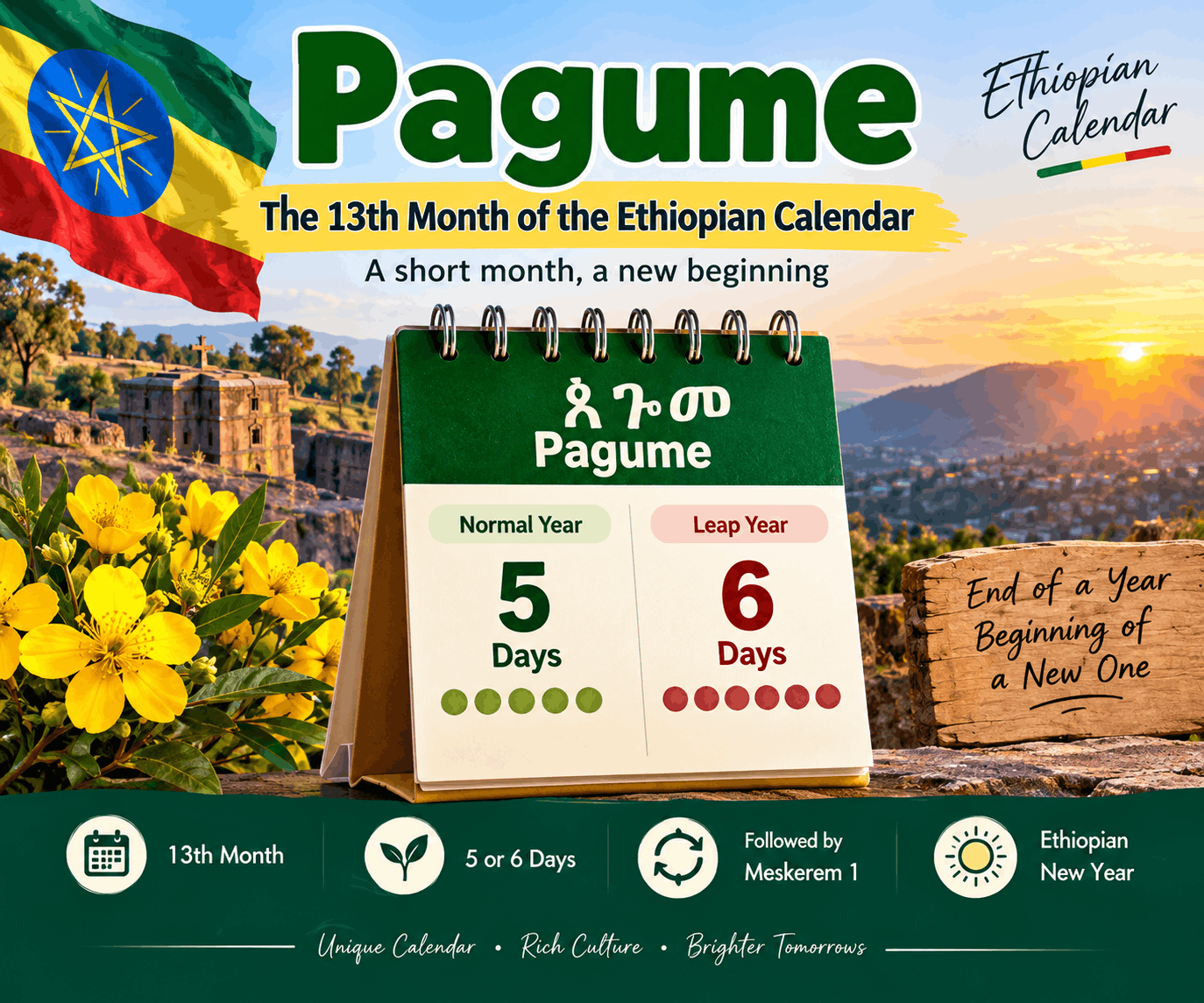
Pagume is the 13th and final month of the Ethiopian calendar. Unlike the first 12 Ethiopian months, which each have 30 days, Pagume has 5 days in a normal year and 6 days in a leap year. It comes at the end of the Ethiopian calendar year, immediately before Meskerem, the first month of the new Ethiopian year.
What Is Pagume?
Pagume is a short month at the end of the Ethiopian calendar year. It follows Nehasse, the 12th month, and comes immediately before Meskerem, the beginning of the next Ethiopian year. Pagume is one of the most distinctive features of the Ethiopian calendar because its length is much shorter than the other months. Its extra day in a leap year helps the calendar maintain its annual cycle.
How Many Days Are in Pagume?
Pagume normally has 5 days. In an Ethiopian leap year, Pagume has 6 days. The first 12 months of the Ethiopian calendar each have 30 days, so Pagume provides the additional days needed to complete the calendar year. The number of Pagume days is therefore an important difference between a normal Ethiopian year and a leap year.
Pagume in a Leap Year
In an Ethiopian leap year, Pagume has 6 days instead of 5. The additional day makes the Ethiopian calendar year 366 days long, similar to a leap year in other calendar systems. Pagume therefore plays an important role in completing the Ethiopian calendar cycle before the next Ethiopian New Year begins on Meskerem 1.
Pagume and the Ethiopian New Year
Pagume is the final month of the Ethiopian calendar year and is followed by Meskerem 1, the Ethiopian New Year. Because Pagume has only 5 or 6 days, it provides a short transition period before the beginning of the next Ethiopian year. After Pagume ends, the calendar starts again with Meskerem, the first of the 13 Ethiopian months.
Why Is Pagume Important?
Pagume is important because it completes the Ethiopian calendar year and highlights the unique 13-month structure of the calendar. Its short length makes the Ethiopian calendar different from the Gregorian calendar, while the additional sixth day in a leap year helps complete the annual cycle. Understanding Pagume is useful for anyone learning about Ethiopian dates, calendar conversion, and Ethiopian New Year.
Pagume and the Ethiopian Calendar Months
The Ethiopian calendar has 13 months in total. The first 12 months—Meskerem through Nehasse—each contain 30 days, while Pagume is the 13th and final month. Pagume has 5 days in a normal year and 6 days in a leap year. This unique month structure is one of the main features that distinguishes the Ethiopian calendar from the Gregorian calendar.
Learn more about the 13 Ethiopian Calendar Months, check Ethiopian Calendar Today, or use our Ethiopian Date Converter to convert dates between the Ethiopian and Gregorian calendars.
For additional information about Pagume and the Ethiopian calendar system, you can refer to the Timeanddate Ethiopian Calendar resource.