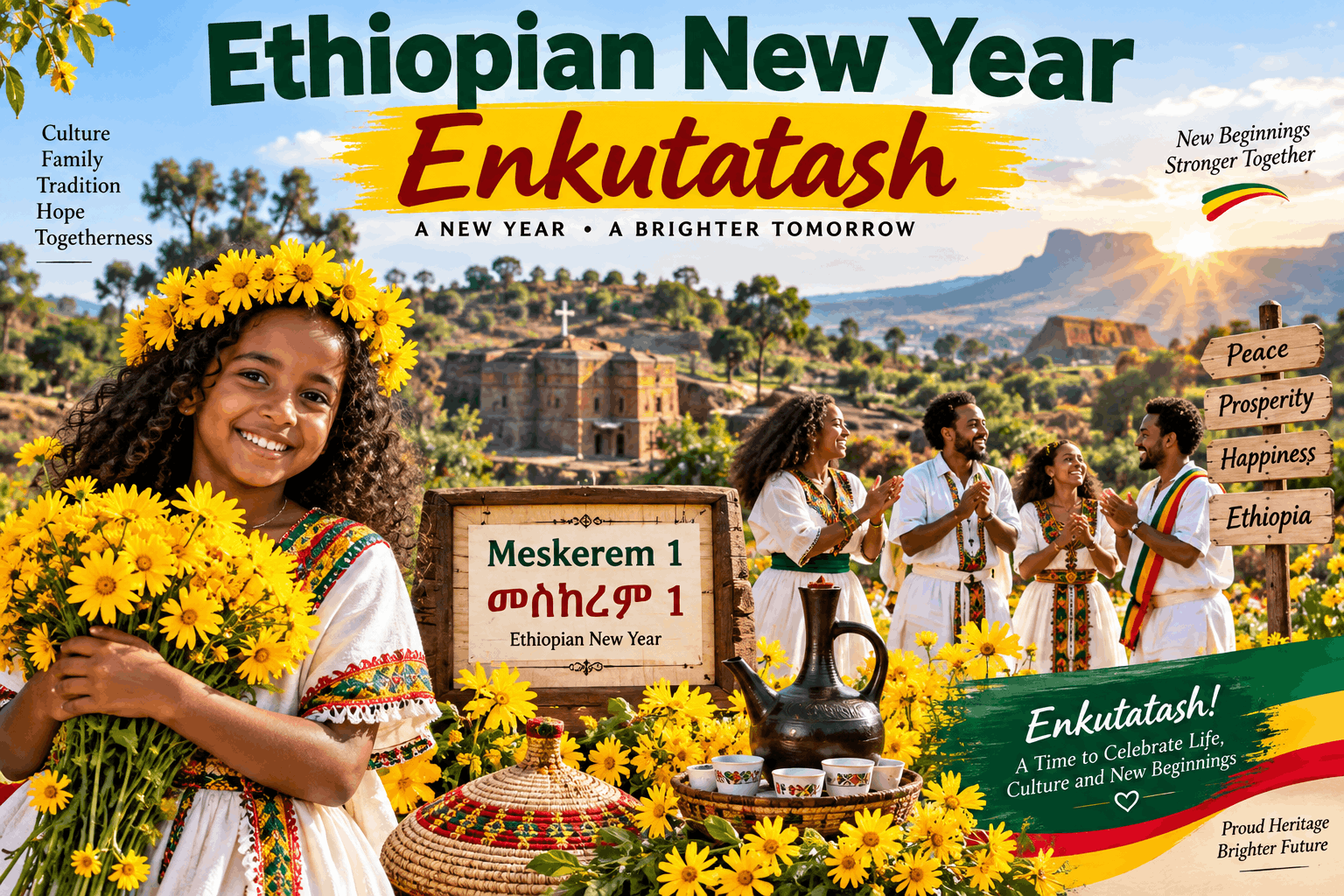
Ethiopian New Year, known as Enkutatash, marks the beginning of a new year in the Ethiopian calendar. It is celebrated on Meskerem 1, which usually falls on September 11 in the Gregorian calendar and September 12 in the year before a Gregorian leap year. Enkutatash is an important cultural celebration in Ethiopia and is associated with new beginnings, family gatherings, music, traditional celebrations, and festive activities.
What Is Enkutatash?
Enkutatash is the Ethiopian New Year celebration and begins on Meskerem 1, the first day of the Ethiopian calendar. The celebration marks the start of a new Ethiopian calendar year and is an important time for families and communities to come together. People may celebrate with traditional foods, music, dancing, greetings, and festive gatherings. Enkutatash is also associated with renewal and new beginnings.
When Is Ethiopian New Year Celebrated?
Ethiopian New Year is celebrated on Meskerem 1, the first day of the Ethiopian calendar. In the Gregorian calendar, this usually corresponds to September 11. In the year before a Gregorian leap year, it falls on September 12. The date marks the beginning of a new Ethiopian calendar year and is observed with cultural and family celebrations across Ethiopia.
How Is Ethiopian New Year Celebrated?
Ethiopian New Year celebrations often bring families and communities together. People may wear traditional clothing, prepare special meals, visit relatives and friends, exchange New Year greetings, and take part in music and dancing. Children may also participate in festive activities and traditional celebrations. The exact customs can vary between communities and regions, but the central theme of Enkutatash is welcoming a new year with family, community, and celebration.
Ethiopian New Year Traditions and Customs
Ethiopian New Year traditions can include family gatherings, traditional foods, music, dancing, prayers, and exchanging greetings. In some communities, children and young people may take part in traditional songs and festive activities. Yellow flowers, particularly the bright yellow Adey Abeba, are also associated with the season in Ethiopia. These traditions reflect the cultural importance of welcoming the New Year and spending time with family and community.
Why Is Ethiopian New Year Important?
Ethiopian New Year is important because it marks the beginning of a new Ethiopian calendar year and brings together cultural, family, and community traditions. It is a time when people welcome a fresh start, spend time with loved ones, share greetings, and participate in celebrations. Enkutatash also provides an opportunity to experience and preserve Ethiopian cultural traditions.
Ethiopian New Year and the Ethiopian Calendar
Ethiopian New Year begins on Meskerem 1, the first month and first day of the Ethiopian calendar. The Ethiopian calendar has 13 months, with the first 12 months having 30 days each and Pagume completing the year with 5 or 6 days. Enkutatash therefore represents both a cultural celebration and the start of a new Ethiopian calendar year.
You can also explore our Ethiopian Calendar Today page to check the current Ethiopian date, learn about the 13 Ethiopian Calendar Months, and use our Ethiopian Date Converter to convert dates between Ethiopian and Gregorian calendars.
For additional information about the Ethiopian calendar and Ethiopian New Year, you can refer to the Timeanddate Ethiopian Calendar resource.